
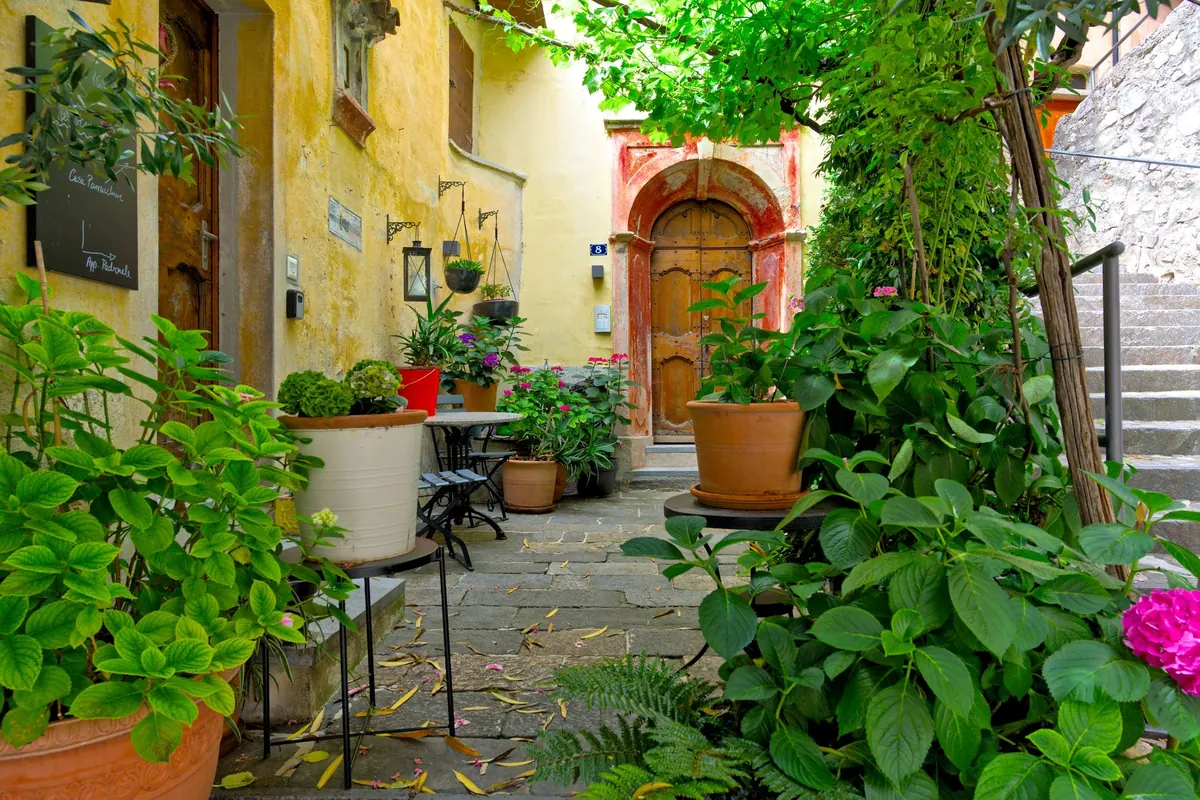
A courtyard works differently from a garden. You are not filling space so much as enclosing it: three walls, a floor, a roof of sky, and a handful of decisions repeated until they look inevitable. The Mediterranean vocabulary for this is small and stubbornly effective — cypress for height, stone for the floor, canvas or timber for shade, and a seat placed where the afternoon sun stops being a problem. Get those four right and the planting reads as decoration. Get them wrong and no number of pots will rescue the space.
What follows is the order I would work in. It keeps you from buying furniture before you know where the shade actually falls at four in the afternoon.
Start With the Envelope, Not the Furniture
Before anything is ordered, spend an hour in the courtyard with a notebook. Note which wall faces south and which catches the west sun, where doors swing, where the drain sits, and where the ground already falls away from the house. These facts will decide almost everything else.
Pay attention to walls as well as sky. Masonry stores heat through the day and releases it after sunset, which is why a courtyard against a west-facing wall stays warm long into the evening. That is a gift for night seating and a problem for anything planted tight against it that dislikes hot, dry roots.
Write down what you find:
- The hour when the first patch of shade appears, and where it lands.
- Any spot where water pools after rain, or where a downpipe discharges.
- Which corner catches a breeze in summer — often the only comfortable place in August.
- The width of the space wall to wall, and the height of the walls, so you can judge proportion.
As a rough rule, a courtyard smaller than about twenty-five square metres needs one strong vertical idea, not five. One line of cypress, one tree, one pergola. Repetition makes small spaces feel calm; variety makes them feel crowded.
Cypress in Pots: The Vertical Line
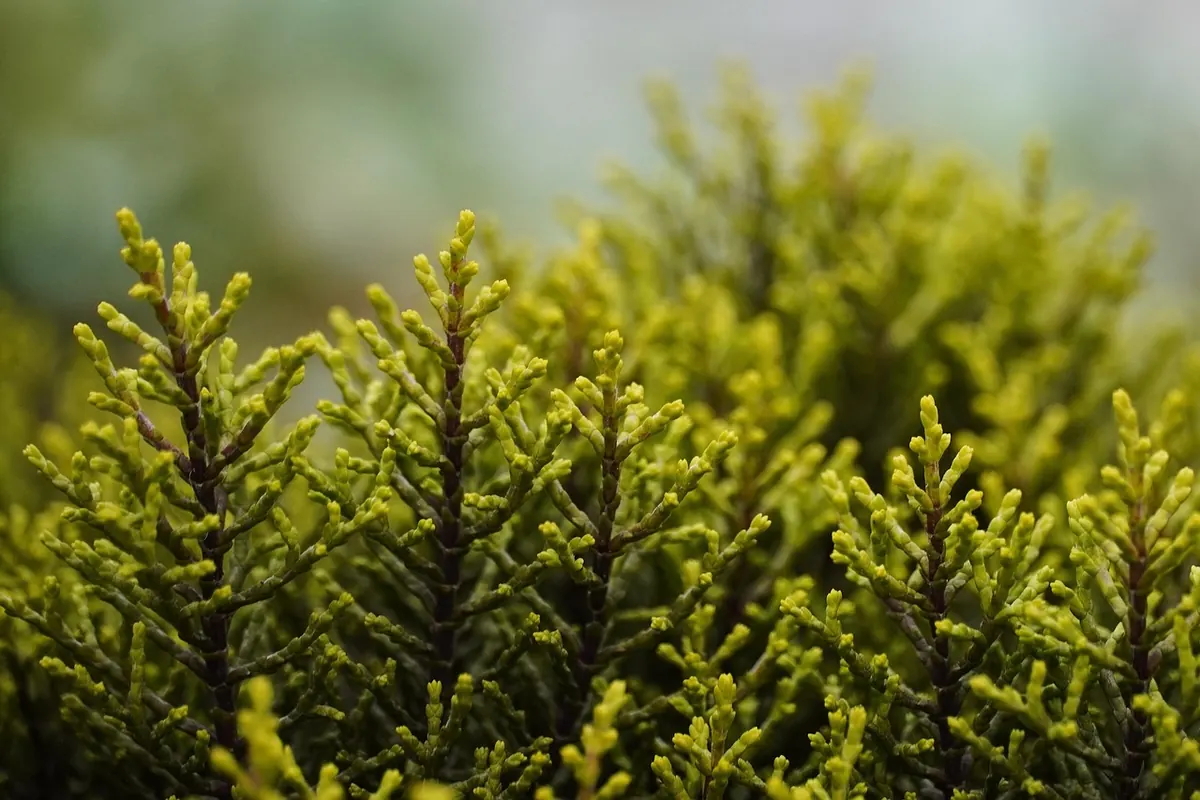
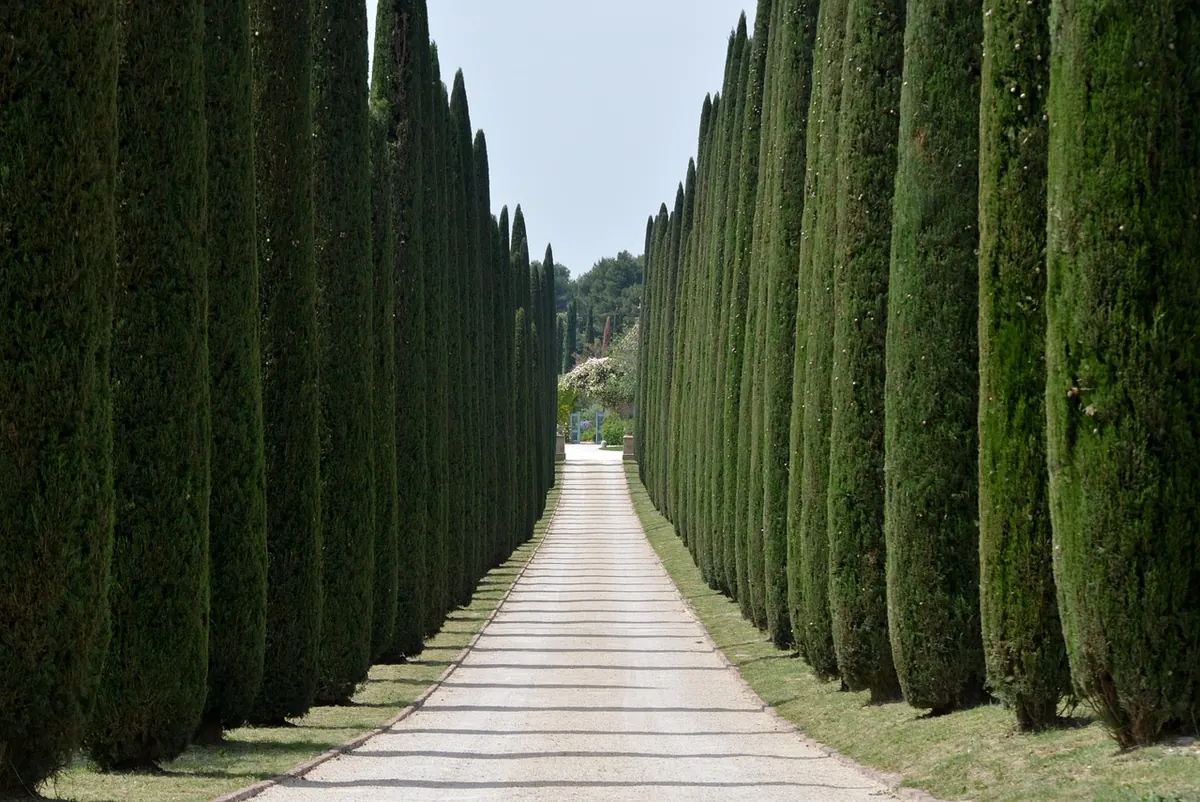
Italian cypress (Cupressus sempervirens) is the obvious choice and remains the best one, partly because it grows upward rather than outward. In a courtyard where floor space is precious, that narrow column of dark green buys you height for almost no ground plan.
Choosing the right plant
For narrow columns, look for the upright forms sold as 'Stricta' or 'Pyramidalis'. Where a full-size tree would overwhelm the space, dwarf cultivars such as 'Tiny Tower' or 'Wilma' keep the shape at a fraction of the height and suit low pots and doorway flanks. Buy plants with a single clean leader and dense foliage to the base; a leggy cypress will never fill in below.
Pots, soil and position
Go deeper rather than wider. A pot of fifty centimetres across and sixty deep will serve a small tree far better than a shallow bowl of the same volume, and taller plants need heavier pots simply to stay upright in wind. Terracotta breathes and looks right against stone, but it is heavy and can crack in hard frost; in cold-winter gardens, lift pots onto trolleys or wrap them.
Use a free-draining mix — roughly two parts loam-based compost to one part coarse grit or pumice — and put a generous layer of crocks in the base. Stand the pot on feet so water can escape freely. Cypress tolerates dry spells once established but resents sitting in wet compost, and that is the single most common way potted specimens are lost.
Place them where they will be seen from the house: a pair flanking a door, a run of three along a blank wall, or a single sentinel at the corner that turns a view. Even spacing gives rhythm and formality; an uneven group of three feels looser and more lived-in. Either is fine, but choose deliberately.
Water thoroughly in the first season, then let the top few centimetres dry between waterings. Trim lightly in late spring to keep the outline crisp, and never cut back into bare old wood — cypress does not regrow from it. Keep the foliage out of deep shade; these trees want sun on their leaves, so let the shade structure cover the table, not the pots.
Stone Underfoot
The floor does more for the Mediterranean feel than any plant. It also has to survive sun, rain, dropped glasses and bare feet, so choose for grip and coolness as much as for colour.
Honest materials age best. Travertine and limestone give a pale, warm surface that reflects light into the courtyard; both are porous and benefit from sealing if you are worried about oil and wine stains. Sandstone and granite are hardier. Terracotta tiles bring colour but demand a little care in frost. Gravel and decomposed granite are cheap, quick and forgiving, and they make an excellent counterpoint to a small area of paving.
Keep the palette to one or two materials. Large slabs with few joints make a small courtyard feel larger; a busy pattern of small tiles does the opposite. Lay paving with a slight fall — around one to two per cent — away from the house, and check it before the mortar sets. For a light-traffic courtyard, dry-laying on compacted grit is within reach of a confident DIYer and can be lifted if you change your mind. For anything carrying weight or traffic, use a proper bedding mix.
Avoid polished stone in shaded or wet areas; it becomes treacherous. And think about heat: dark stone can be uncomfortable underfoot in August, while pale stone stays walkable and bounces light back onto the walls.
Shade That Earns Its Place
Shade is the part most people get wrong, usually by making it too solid. A courtyard needs dappled light, not a lid. Timber pergolas with spaced slats are the classic solution: set the slats roughly a slat-width apart and you get a moving pattern of sun and shadow that changes through the day. Orient the structure so it shades the seating in the afternoon, and keep clearance at two metres and twenty or so to avoid a cramped feeling.
Retractable canvas awnings suit smaller courtyards and let you open the space to winter sun. Shade sails look contemporary rather than Mediterranean but work well overhead — fix them properly into structure, not just into a thin render or a single brick, because wind loads on a sail are considerable. In hotter climates, plant a deciduous vine over the pergola: it leafs out exactly when you need shade and drops its leaves when you want the warmth.
Seating, and the Shape of Conversation
Furniture is where a good courtyard becomes a usable room. A masonry bench built along one wall, topped with a weatherproof cushion, does three jobs at once: it defines the edge, it needs no storage, and it can sit under planting without looking fussy.
For comfort, aim for a seat height of about forty-two to forty-five centimetres and a depth of forty-five to fifty. Tables sit best at around seventy-two to seventy-five centimetres high. Allow sixty centimetres of width per person at a table, seventy-five if you have room, and leave ninety centimetres behind the chairs so people can push back without scraping the wall.
Then resist filling every corner. One generous table, a couple of light chairs that can be moved into or out of the sun, and a low side table for a book are usually enough. If the courtyard has a view — a pot, a water bowl, the line of the cypress — arrange the seating to face it rather than lining chairs up against the walls.
Water, Light and the Last Ten Per Cent
A shallow stone bowl of water gives sound, cools the air slightly and draws birds. Low lighting is more flattering than overhead: a small uplight at the base of each cypress, a lantern on the table, a couple of candles in glass. Keep it to one repeated material — aged brass, black metal, terracotta — so the details read as a decision rather than an accumulation.
Feed and water in spring, top up gravel mulch on pots to hold moisture, sweep the paving before it stains, and check the fixings on any shade structure at the start of summer. That is the whole maintenance calendar, more or less.
A Practical Weekend Plan
Start with a morning of measurement, an afternoon of marking out, and the rest follows in stages. Mark the sun's path with chalk on the paving at ten, two and five o'clock, then draw the footprint of the table and the pots in chalk too. Move them until the proportions feel right before you commit.
- Clear and level the floor, and settle the drainage question first.
- Fix the shade structure while the courtyard is still empty and ladders have room.
- Lay or repair the paving, allowing a fall away from the walls.
- Set the largest pots in position, then plant the cypress and water them in.
- Bring in seating last, and live with it for a week before buying anything else.
Then leave it alone for a season. A courtyard improves most in its second year, when the stone has lost its newness and the cypress has begun to look as though it was always there.
Photo: Jean-Paul Wettstein / Pexels