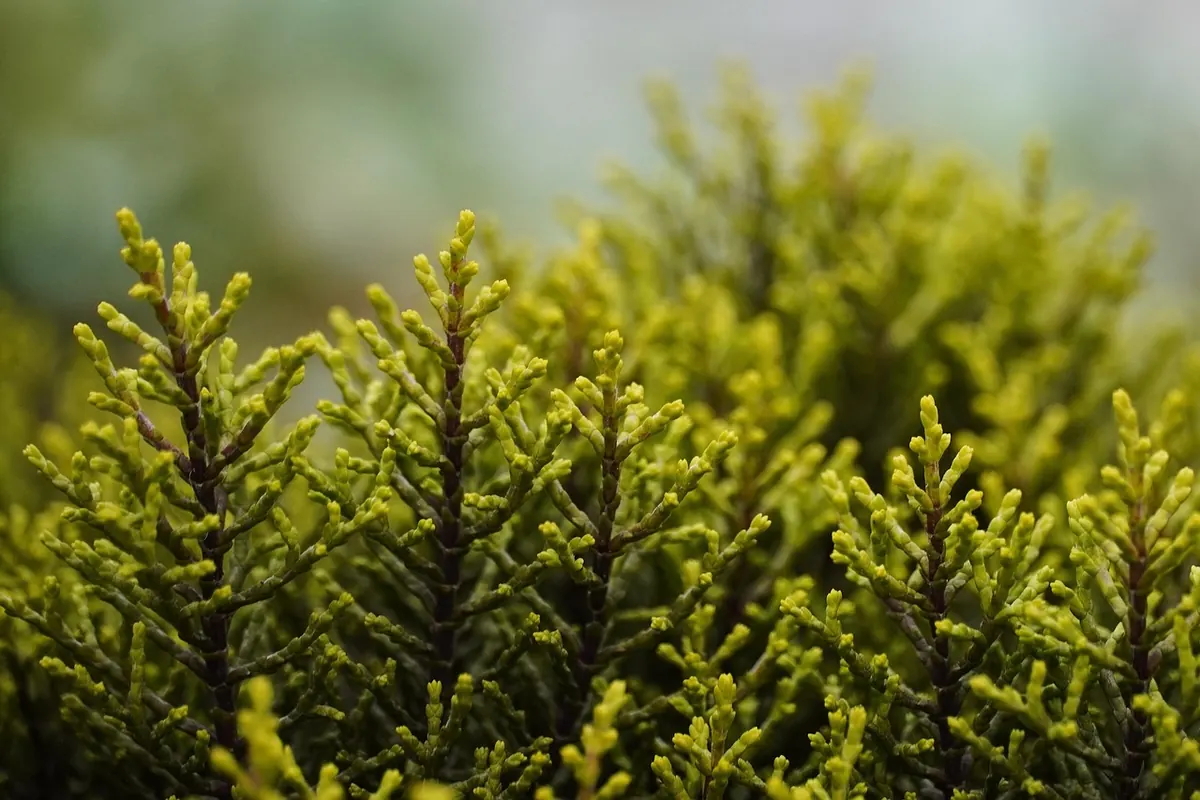

Italian cypress earns its place the way a column earns its place in a building: it gives the eye somewhere to go. A single Cupressus sempervirens 'Stricta' against a stone wall, or a line of them framing a path, does more than a whole border of flowers. The planting at its feet is where most gardens go wrong. All too often the cypress stands in a bed of hydrangeas, roses or lawn — plants that want water in July, exactly when the tree wants none. The companions below are chosen for the opposite reason: they like the same sun, the same thin, fast-draining soil, and the same long dry spell in summer. They also give you what the cypress cannot — colour at eye level, scent, and something to look at while the trees grow slowly upward.
Start with the conditions, not the colour
Before choosing a single plant, look at what the cypress is standing in. Italian cypress wants at least six hours of direct sun, soil that drains within an hour or two of heavy rain, and — once established — no summer irrigation at all. Its roots run wide and fairly shallow, and it dislikes both wet feet and a damp, shaded trunk.
That rules out most of the classic border, and it sets the design rule for everything that follows: the companions must be able to go from April to September on rainfall alone in a normal Mediterranean year, and survive on less in a bad one. Two practical points are worth getting right at the start:
- Keep a clear ring of 30–50 cm around each trunk. No groundcover touching the bark, and never a mulch mound piled up the stem.
- Use coarse gravel or grit as a mulch instead of bark or compost. It reflects heat, keeps the collar of the plant dry, and suits everything planted nearby.
None of the plants below needs feeding. If your soil is heavy clay, plant on a slight mound with grit worked in, or grow these in raised beds and gravel instead.
Silver leaves and strong scents
Lavender is the obvious partner and still the best one. Choose a compact form such as 'Hidcote' for the front of a cypress row, or Lavandula x intermedia 'Grosso' where you want a low hedge and a long flowering season. Plant on a slight mound, water it through the first summer only, and clip it after flowering — taking about a third of the growth, but always staying within leafy wood. Cut into the bare stems and you will be left with dead twigs for years.
Rosemary gives you a second, smaller vertical so the cypress does not look stranded. An upright form such as 'Miss Jessopp's Upright' repeats the column shape at a third of the height. Trim it lightly after flowering rather than shearing it into a box.
Santolina, in its silver S. chamaecyparissus or the green S. rosmarinifolia, makes a tight low cushion that sets off grey cypress foliage. Clip it after flowering, or it will open up in the middle and fall apart.
Teucrium fruticans is underused: silver stems, small grey leaves, and blue flowers in late spring. It takes heat, tolerates being cut hard in early spring, and looks good against gravel.
Artemisia 'Powis Castle' supplies the finest silver of the group. Cut it back to a low framework each spring, otherwise it flops open in the middle of summer.
Shrubs that take the heat
Cistus, the rock rose, is the fastest way to cover ground near a cypress. Buy small plants, do not enrich the soil, and give them space — most spread to about a metre and resent crowding. The reward is a sheet of white or pink tissue-paper flowers in late spring. Never prune hard into old wood; a light pinch of the tips in the first two years is enough. Expect to replace them after a decade, which is simply part of the deal.
Phlomis fruticosa, Jerusalem sage, holds a rounded shape and sends up whorls of yellow flowers that dry on the stem beautifully. Cut the spent flower stems back in spring and leave the shrub to get on with it.
Euphorbia characias subsp. wulfenii is the most architectural of the three: grey-green stems, acid-green flower heads in early spring, and a silhouette that holds through winter. Wear gloves and glasses when you cut it — the sap is a skin and eye irritant, and it should never touch your face. Remove spent stems at the base after flowering.
Grasses for movement
Two grasses do more for a cypress planting than any flower. Stipa tenuissima (now sold as Nassella tenuissima) makes fountains of fine, oat-coloured threads that catch every breath of wind — and catch the light beautifully against dark cypress green. Run your fingers through the clump in late winter to pull out the dead thatch. It self-seeds freely, so edit the seedlings where you do not want them.
Anemanthele lessoniana, pheasant's tail grass, shifts from green to copper and orange as the weather cools and holds its colour through winter. It copes with dry shade under a cypress, which few grasses do.
Both are short-lived in dry gardens. Divide or replace them every few years rather than coaxing a tatty clump along. One caution: cypress is resinous and burns readily. Keep dry grass cut back near the trunks, and avoid building a ladder of dry vegetation up to the crown.
Bulbs and a winter iris
Bulbs are ideal under cypress because they do their work while the tree is quiet and sleep through the summer drought. Plant Allium sphaerocephalon in drifting groups of twenty or more at the outer edge of the root zone, and Nerine bowdenii for pink flowers in September when little else is happening. Plant them where drainage is sharpest, and never directly against a trunk.
For the eleventh plant, make it Iris unguicularis. It wants exactly what the cypress wants: a hot, dry summer baking, poor soil, and a warm wall or stone edge behind it. The reward is scented purple flowers appearing out of nowhere on grey winter days. Cut out the old foliage in late summer so the flowers can be seen.
Three pairings to copy
- Path edge. A row of cypress on one side, a low ribbon of lavender 'Hidcote' on the other, with gravel between and Allium sphaerocephalon threaded through the lavender. Silver santolina marks the corners.
- Terrace or wall. Cypress against stone, then Cistus, Phlomis and a swathe of Stipa tenuissima in front. Nothing needs watering after the second summer.
- Gravel garden. Upright rosemary as a small echo of the cypress, Euphorbia wulfenii for structure, thyme creeping at the edges, and Nerine bowdenii pushing up through the gravel in autumn.
Planting, watering and the first two years
Plant in autumn, when the soil is still warm and the rains are coming. Dig a hole wider than it is deep, set the rootball so its top sits level with the ground or a finger's width proud of it, and firm gently. Heavy clay is the one real obstacle: improve a wide area rather than a narrow hole, or plant on a mound and let the water run off.
Water at planting, then give each plant a deep soak every two to three weeks through the first summer — more often in extreme heat — and roughly half as much in the second. By the third year, stop, except in an unusually severe drought. Deep, occasional watering builds the roots you want; a daily trickle builds roots that stay near the surface and sulk.
Space lavender 30–40 cm apart, cistus and phlomis about a metre. Prune lavender, rosemary and santolina after flowering; pinch cistus lightly while it is young; cut euphorbia stems at the base in spring. As for the cypress itself, remove only dead or crossing growth, and never shear into old, leafless wood — it will not regrow.
The cypress will still be standing in fifty years.
Photo: Ralphs_Fotos / Pixabay