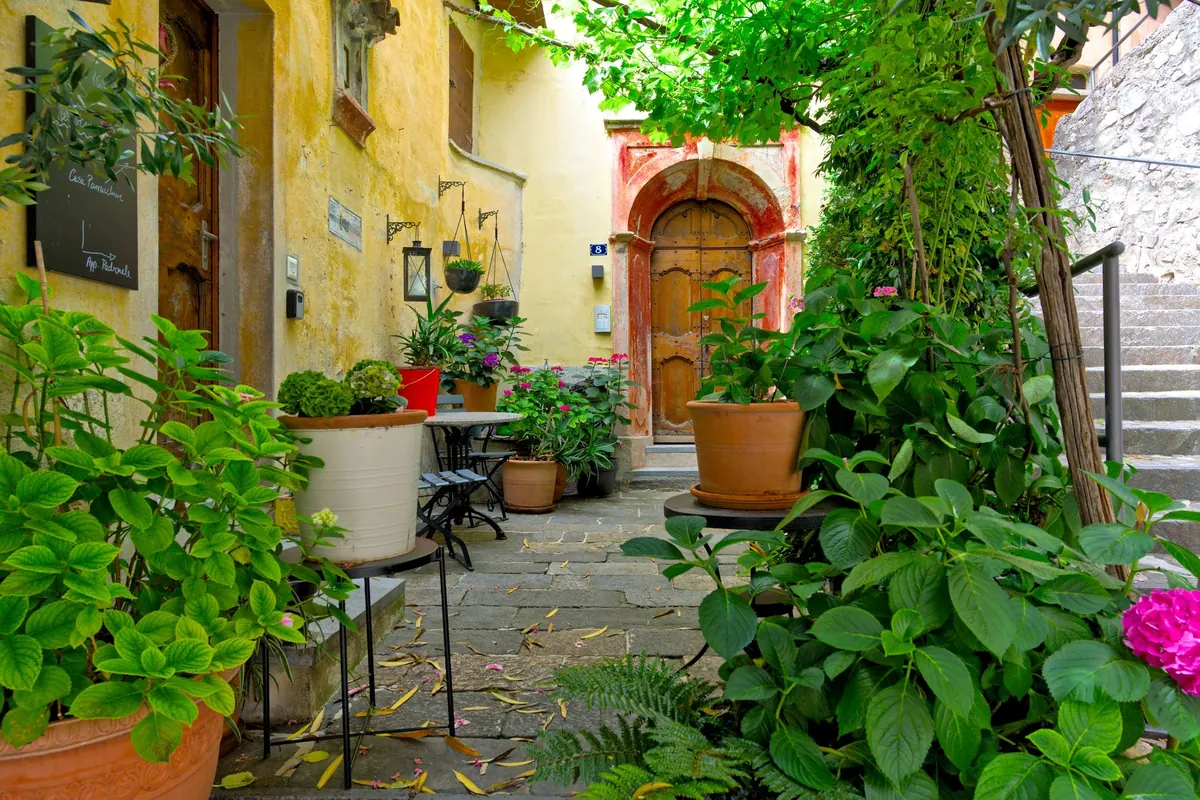

A Mediterranean garden looks as though it happened by itself. A cypress leaning over a gravel path, a bank of lavender spilling onto warm stone, an olive with a folding chair beneath it. None of that is accidental. The ease comes from a handful of decisions made early and then repeated until the whole plot feels inevitable: structure, a limited palette, and a stubborn respect for the dry season.
If you are starting with a bare terrace, a strip of lawn you would rather not mow, or a slope of cracked earth, the temptation is to go straight to the nursery. Wait a month. The plants will be better for it, and so will your back.
Start With the Bones
Before you buy a single pot, decide where the paths run, where the ground changes level, and what you want to see from the kitchen window. Mediterranean gardens are geometric at heart. Think of the plot as a floor plan: rectangles for gravel, squares for planting, a long line for an axis. Two or three shapes, repeated, will do more than a dozen fussy curves.
Draw your plot to scale on graph paper and sketch the bones in pencil. Then check them against reality — walk the lines with a garden hose or a bag of sand before anyone digs. A path that looks generous on paper can turn out narrow once a wheelbarrow needs to pass, so keep main routes at least 90cm wide and 120cm where two people might walk together.
Low walls are the workhorses of this style. A wall 40–60cm high marks a boundary, retains a little soil, and doubles as a seat. Dry stone suits a wilder plot; rendered block painted the color of local dust suits a formal one. On a slope, cut two or three flat terraces rather than fighting the gradient, and connect them with shallow steps — roughly 15cm rise with a 35cm tread is comfortable and looks calm.
Vertical Accents That Hold the Eye
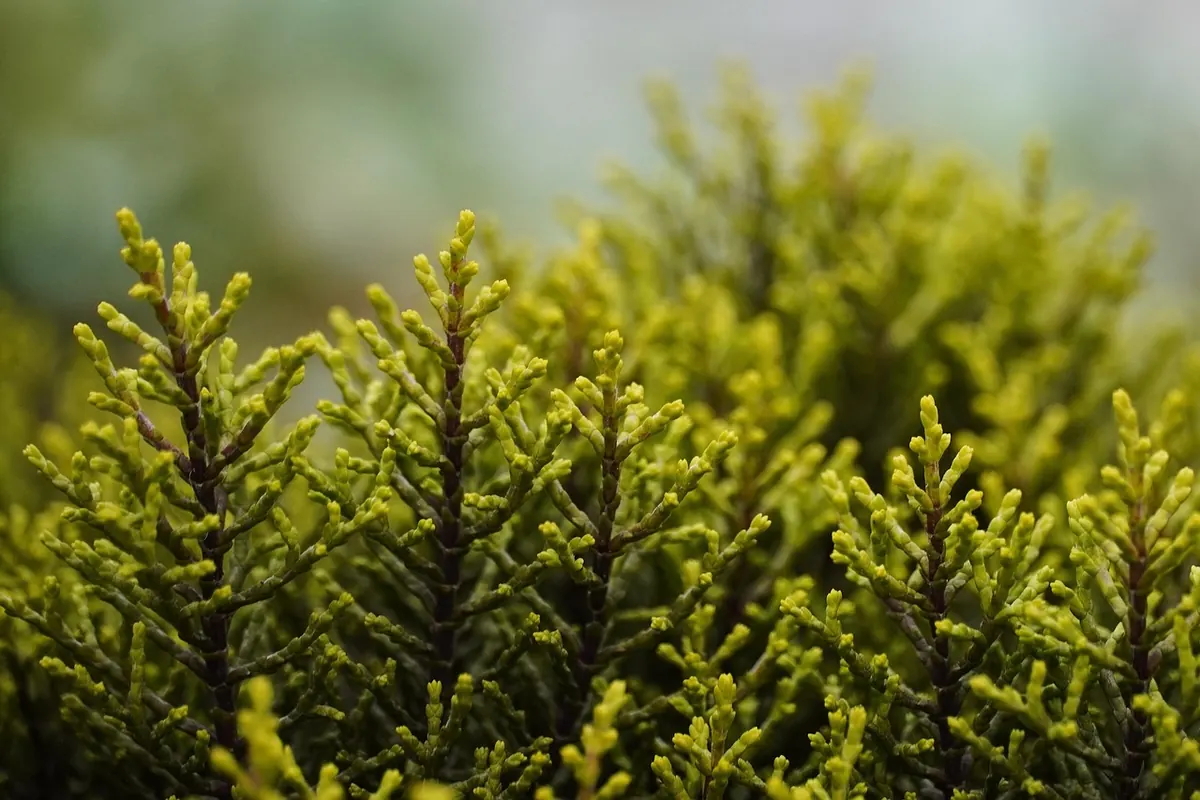
A flat garden needs punctuation. Italian cypress (Cupressus sempervirens) is the classic exclamation mark, and it earns its place because it is narrow, dark, and almost maintenance-free once established. Use it deliberately. A pair flanking a step, a row marking a boundary, three spaced along a wall — never a scattering of singles across the plot.
Rhythm matters more than quantity. In a long garden, repeat a vertical every 4–6m so the eye travels; in a small courtyard, one specimen is usually enough. Planted in a line as a screen, cypress will knit together at about 60–80cm spacing, though they are slower and pricier than a hedge of something faster.
If cypress struggles in your soil or your winters, there are honest substitutes: upright rosemary, bay laurel, a holly-leaved Phillyrea, a standard olive with a clear trunk, or a columnar juniper. What matters is the shape, not the species label. One strong vertical, repeated, will make a flat site feel designed.
Gravel, Stone, and the Ground Plane
Gravel is not decoration. It mulches the soil, keeps weeds down where it is laid thick, reflects light up into the undersides of plants, and — most usefully — gives a continuous surface so that a small garden reads as one room rather than a series of islands.
Choose a washed aggregate of 6–10mm and lay it 5–7cm deep. For paths that take heavy foot traffic, a self-binding gravel that compacts firm is kinder to ankles and wheelbarrows. If you plan to plant through the gravel, skip the membrane and hand-weed the first year; if the area is purely for sitting and strolling, a woven landscape fabric underneath will save you hours.
Get the edging right and everything above it looks better. A steel strip, or stone set flush with the gravel so a foot or a mower passes over without catching, keeps the line crisp. When planting through gravel, keep the crown of each plant slightly above the gravel surface so water does not pool around the stem in winter.
Planting in Layers
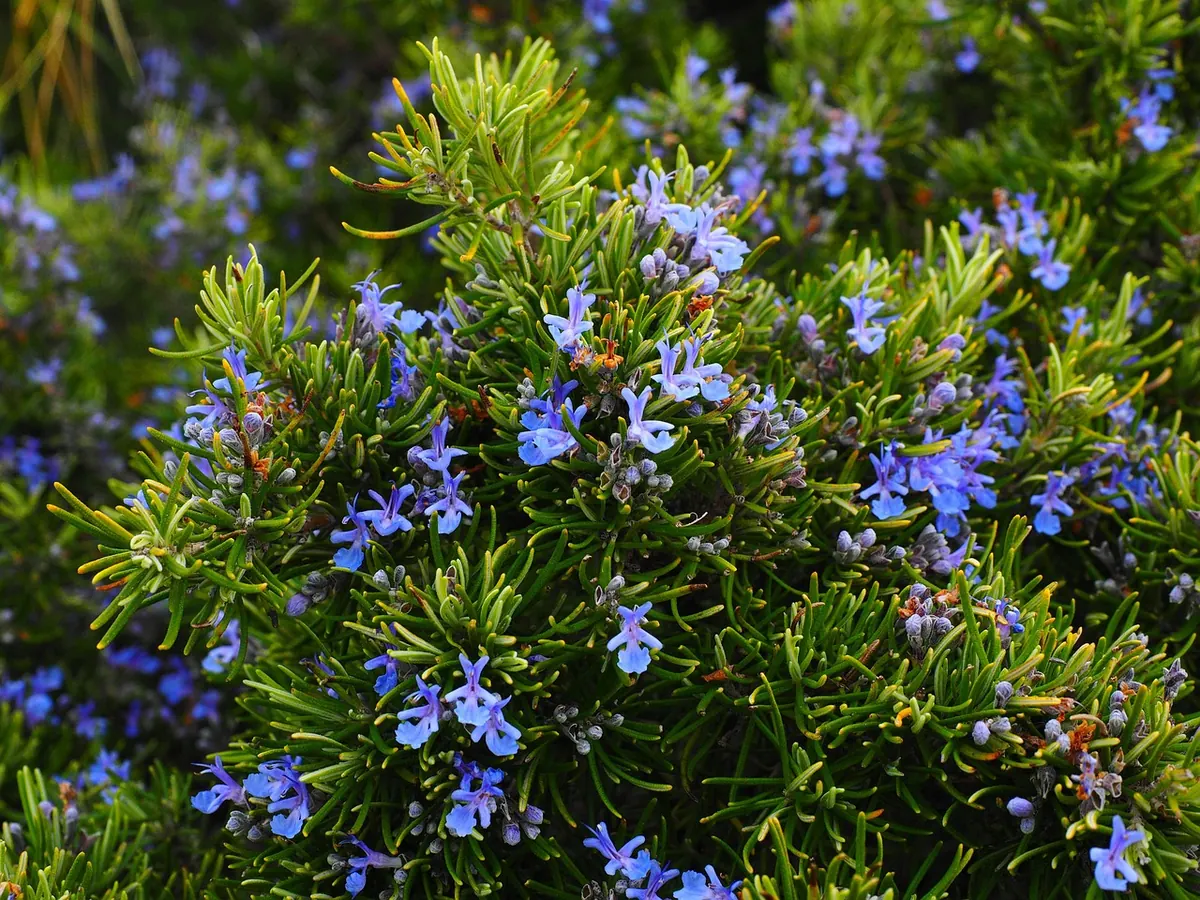
A Mediterranean planting plan works in three rough layers, and the top one is not a tree. The structural layer is evergreen and holds the space together: olive, myrtle, lentisk, Viburnum tinus, bay. The middle layer is shrubs and subshrubs — lavender, rosemary, cistus, santolina, phlomis, teucrium — which give color and scent and take hard pruning. The ground layer is bulbs and perennials that disappear and return: alliums, Iris unguicularis, euphorbia, agapanthus, sedum.
The single most useful habit is grouping plants by thirst rather than by color. Put the ones that need a little summer water together near the tap or the terrace, and let the far corner fend for itself. Watering a mixed border evenly wastes water on the tough plants and starves the thirsty ones.
- Plant in autumn, when soil is warm and rain is on the way. Roots establish before the heat arrives.
- Dig a hole twice as wide as the pot but no deeper, and loosen the sides so roots can escape.
- Space generously. Most beginners plant too close; leave room for the mature spread printed on the label.
- Water in thoroughly, then mulch with gravel or coarse compost, keeping it clear of stems.
- Water deeply but infrequently for the first two summers — a long soak every two or three weeks beats a daily sprinkle.
- After that, water only the plants that visibly ask for it, and always in the early morning or evening.
Color: Foliage First, Flowers Second
The gardens that age best are built on three or four foliage colors: silver, deep green, grey-green, and the acid green of euphorbia. These hold the picture together through the quiet months. Flowers are the seasonal guests — loud in spring, when cistus and lavender and iris do their work, sparse in high summer, and returning in autumn with perovskia, sedum, and the first cyclamen.
Restraint is what makes the bright things sing. Pick two flower colors and stick to them for a season, then let the architecture carry the rest: terracotta pots, lime-washed walls, the honey of local stone. In a dry garden, hard surfaces are a color choice as much as a structural one.
Outdoor Rooms
The best Mediterranean gardens are furnished, not just planted. A pergola 2.5–3m wide covered with grape, wisteria, or — in mild coastal gardens — bougainvillea creates a shaded room where you will actually sit at two in the afternoon. Gravel underfoot, a low wall to lean against, a table that seats six without squeezing: these are design decisions, and they cost less than a border of rare perennials.
Give each room a job. One for shade and long lunches, one for morning sun and a single chair, one for pots and cutting. Separate them with a change of level, a low hedge, or a short run of wall rather than a fence. And check the winter sun before you plant anything tall on the south side — a garden that only works in July will feel like a mistake by November.
Your First Year, Step by Step
Watch the plot for a full day, noting where sun sits at nine, noon, and five. Draw the bones, then order edging and gravel before you order plants — the hard landscape sets the rules. Buy fewer, larger specimens instead of a trolley of small ones, and put your money into the structure. Plant in autumn, water deeply and rarely for two summers, and resist the urge to fill every gap in the first season.
Then wait. A Mediterranean garden settles slowly, and the third year is when the gravel, the walls, and the cypress finally start to look as though they have always been there. That patience is the whole trick.
Photo: Hans / Pixabay